

EXPOSICIONES
Disfuncionarias
Tanit Plana
11 jun. — 25 oct. 2026
Museo Cerralbo
— Madrid

Inauguración
11/6/2026
Organiza
Ministerio de Cultura, Museo Cerralbo y PHotoESPAÑA
Horarios de la sede
Martes a sábados 09:30-15:00
Jueves 17:00-20:00
Domingos y festivos 10:00-15:00
Sede
Museo Cerralbo
Ventura Rodríguez, 17
Mapa
-
Tanit Plana forma parte de una generación que ha renovado la fotografía española, expandiéndola hacia lo instalativo.
-
Cuestiona los sistemas de representación, conectando imagen, política y cuerpo desde una mirada crítica.
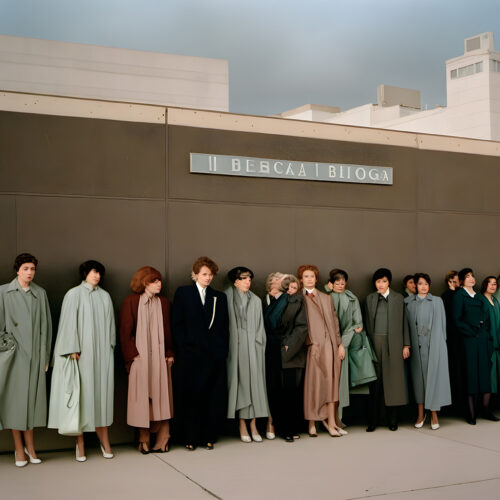
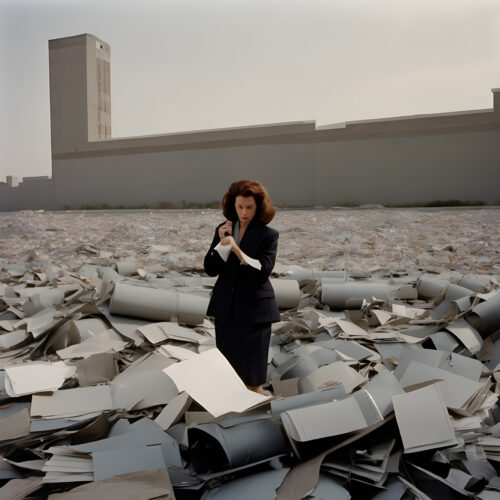
Disfuncionarias es una instalación site specific que propone una aproximación sensible y crítica al cuerpo funcionarial: ese cuerpo que clasifica, ordena, inventaría y almacena aquello susceptible de ser regulado, registrado o conservado. A través de telas de gran formato que atraviesan el espacio expositivo, la instalación de Tanit Plana (Barcelona, 1975) explora la tensión entre las lógicas institucionales que sostienen el museo y la realidad viva de las colecciones, que siempre exceden cualquier sistema de clasificación.
En este contexto, la inteligencia artificial aparece como una extensión contemporánea de esa lógica administrativa. No solo amplía el campo de lo visible, sino que introduce un principio organizativo que traduce el mundo en datos, patrones y relaciones matemáticas. Bajo esta racionalidad, imágenes, objetos y documentos se vuelven potencialmente indexables y procesables, prolongando la aspiración histórica del archivo: hacer el mundo legible, gestionable y calculable.
Las imágenes, impresas sobre grandes telas, experimentan una transformación de su forma rígida. Lo que inicialmente se presentaba como un cuerpo estable —figuras ordenadas, composiciones cerradas— se despliega ahora en superficies flexibles que se pliegan, ondulan y desbordan el espacio. La tela introduce una dimensión material que altera la estabilidad de la imagen: lo expuesto se deforma, se desplaza y pierde su contorno fijo, adquiriendo una condición casi orgánica.
En el espacio emergen volúmenes cubiertos que evocan el bulto envuelto: presencias ambiguas que remiten a aquello que está ahí sin mostrarse del todo. Este gesto introduce una dimensión latente del cuidado, un resto que persiste sin integrarse plenamente en el orden simbólico.
Disfuncionarias se sitúa en ese umbral: entre la lógica matemática que organiza y la materia sensible que insiste en excederla. Entre archivo y misterio, aparece el frágil equilibrio que permite que un museo exista.
-
Tanit Plana is part of a generation that has renewed Spanish photography, expanding it toward installation-based practices.
-
She questions systems of representation, connecting image, politics, and the body through a critical perspective.
Disfuncionarias is a site-specific installation that proposes a sensitive and critical approach to the bureaucratic body: the body that classifies, orders, inventories, and stores everything that can be regulated, recorded, or preserved. Through large-scale fabrics that traverse the exhibition space, the installation of Tanit Plana (Barcelona, 1975) explores the tension between the institutional logics that sustain the museum and the living reality of collections, which always exceed any system of classification.
In this context, artificial intelligence appears as a contemporary extension of this administrative logic. It not only expands the field of the visible, but also introduces an organizational principle that translates the world into data, patterns, and mathematical relations. Within this rationality, images, objects, and documents become potentially indexable and processable, extending the archive’s historical aspiration: to render the world legible, manageable, and calculable.
Printed on large fabrics, the images undergo a transformation of their rigid form. What initially appeared as a stable body—ordered figures, closed compositions—now unfolds into flexible surfaces that fold, undulate, and spill into the surrounding space. The fabric introduces a material dimension that alters the stability of the image: what is displayed deforms, shifts, and loses its fixed contour, acquiring an almost organic condition.
Covered volumes emerge in the space, evoking the wrapped bundle: ambiguous presences that point to something that is there without being fully revealed. This gesture introduces a latent dimension of care, a remainder that persists without fully integrating into the symbolic order.
Disfuncionarias situates itself at this threshold: between the mathematical logic that organizes and the sensitive matter that insists on exceeding it. Between archive and mystery, the fragile balance that allows a museum to exist becomes visible.