

EXPOSICIONES
Refusal. Second Fracture
Rafal Milach
5 jun. — 27 sep. 2026
Círculo de Bellas Artes
— Madrid
Inauguración
5/6/2026 12h
Comisariado por
Katarzyna Sagatowska
Organiza
Círculo de Bellas Artes, Instituto Polaco de Cultura y PHotoESPAÑA
Colabora
Adam Mickiewicz Institute y Samsung
Patrocina
KRUK
Horarios de la sede
Lunes cerrado
Martes a domingos
11:00-14:00
17:00-21:00
Sede
Círculo de Bellas Artes
Alcalá, 42
Mapa
-
Rafal Milach es uno de los miembros de pleno derecho más recientes de Magnum Photos.
-
Es un fotógrafo clave en la investigación sobre los sistemas de poder en la Europa contemporánea.
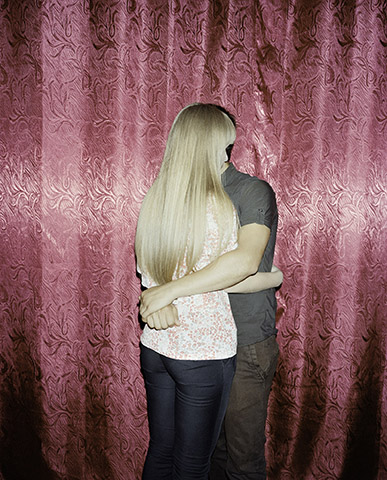
La exposición traza un recorrido por los mecanismos de construcción y fisura de los relatos oficiales en Europa del Este a partir de la obra de Rafał Milach (Gliwice, Polonia, 1978). El proyecto toma como punto de partida la figura de Xenia Degelko, joven activista bielorrusa convertida en icono propagandístico tras la difusión viral, en 2012, de una canción que exaltaba el régimen de Alexander Lukashenko. Su imagen pasó a integrar una galería simbólica de “ganadores” —trabajadores ejemplares y figuras modélicas— destinada a reforzar la narrativa del Estado.
Sin embargo, esta construcción comenzó a resquebrajarse con pequeños gestos de resistencia individual y colapsó en 2020, cuando Degelko, junto a millones de ciudadanos, participó en las protestas contra unas elecciones ampliamente cuestionadas. Este giro revela la fragilidad de los dispositivos de representación del poder y la capacidad de la acción colectiva para subvertirlos.
En paralelo, las movilizaciones sociales en Polonia —en defensa de los derechos de las mujeres, la comunidad LGTBIQ+ y el Estado de derecho, entre otros— evidencian la emergencia de redes de autoorganización que, ante crisis como la llegada masiva de refugiados tras la invasión de Ucrania, han suplido las carencias institucionales. Estas dinámicas han dado lugar a comunidades transnacionales de solidaridad, al tiempo que ponen de relieve la vulnerabilidad de los sistemas de protección frente a la desigualdad estructural.
A través de trabajos como The Winners y Seeding, junto a murales, banderas, vídeos y materiales del Archive of Public Protests, la exposición subraya la potencia de las prácticas colectivas como fuerzas capaces de desafiar el orden político establecido.
-
Rafal Milach is one of the most recent full members of Magnum Photos.
-
He is a key photographer in the exploration of power systems in contemporary Europe.
The exhibition traces the mechanisms through which official narratives in Eastern Europe are constructed and fractured, drawing on the work of Rafał Milach (Gliwice, Poland, 1978). The project takes as its starting point the figure of Xenia Degelko, a Belarusian activist who became a propaganda icon following the viral circulation, in 2012, of a song praising the regime of Alexander Lukashenko. Her image was incorporated into a symbolic gallery of “winners”—exemplary workers and model citizens—designed to reinforce the State’s narrative.
This construction, however, began to fracture through small acts of individual resistance and ultimately collapsed in 2020, when Degelko, alongside millions of citizens, took part in protests against widely contested elections. This shift reveals both the weakness of power’s representational apparatus and the capacity of collective action to subvert it.
In parallel, social mobilizations in Poland—in defense of women’s rights, the LGBTQ+ community, and the rule of law among other issues—highlight the emergence of self-organized networks that, in moments of crisis such as the mass arrival of refugees following the invasion of Ukraine, have compensated for institutional shortcomings. These dynamics have fostered
transnational communities of solidarity while underscoring the vulnerability of systems meant to protect against structural inequality.
Through works such as The Winners and Seeding, alongside murals, flags, videos, and materials from the Archive of Public Protests, the exhibition emphasizes the power of collective practices as forces capable of challenging established political orders.