

EXPOSICIONES
Ruina Montium
Raphaëlle Peria
5 jun. — 27 sep. 2026
Círculo de Bellas Artes
— Madrid
Inauguración
5/6/2026
Comisariado por
Claude Bussac
Organiza
Círculo de Bellas Artes, Casa de Velázquez y PHotoESPAÑA
Horarios de la sede
Lunes cerrado
Martes a domingos
11:00-14:00
17:00-21:00
El domingo 7 de junio, las salas de exposiciones permanecerán cerradas debido a la visita del Papa.
Sede
Círculo de Bellas Artes
Alcalá, 42
Mapa
-
Raphaëlle Peria es una de las voces más recientes y con mayor proyección de la fotografía francesa contemporánea.
-
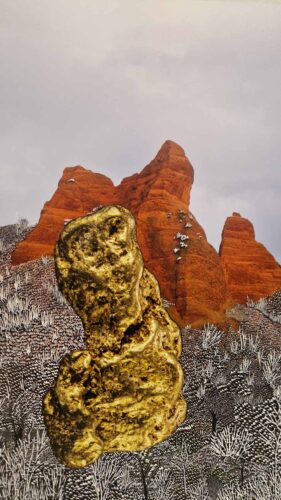
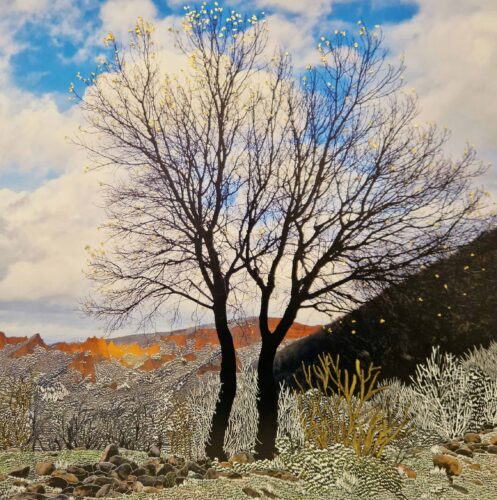
Cada una de sus obras es única y está intervenida minuciosamente, generando una dimensión casi escultórica de la imagen.
En la provincia de León, el paisaje de Las Médulas conserva la memoria visible de una transformación radical. Allí, los romanos aplicaron la técnica conocida como «ruina montium»: un sofisticado sistema hidráulico mediante el cual el agua, conducida por galerías excavadas en la roca, provocaba el derrumbe de la montaña para extraer el oro. La presión del agua abría la tierra desde dentro y modelaba el relieve, dejando un territorio profundamente marcado por la acción humana.
Siglos después, otros procesos han vuelto a atravesar este paisaje. Los incendios recientes han consumido la vegetación que cubría las laderas, dejando al descubierto la materia mineral y revelando, como en una excavación involuntaria, las formas heredadas de la historia.
Es en este territorio modelado por el agua y revelado por el fuego donde Raphaëlle Peria (Amiens, Francia, 1989) —artista francesa actualmente residente en la Casa de Velázquez— sitúa su investigación artística. Aunque sus imágenes parten de la fotografía, su gesto se aleja del registro documental. Sobre la superficie de las impresiones, la artista raspa, borra y dibuja, interviniendo la materia fotográfica para hacer emerger formas latentes. La imagen deja entonces de ser un simple soporte de representación y se convierte en un campo de exploración donde el paisaje parece continuar transformándose.
En esta serie, Peria introduce además fotomontajes en los que aparecen pepitas de oro. Estas presencias discretas evocan la memoria minera del lugar y funcionan como un gesto simbólico: allí donde la montaña fue abierta para extraer su riqueza, la artista parece devolver estos destellos a la imagen, desplazando el sentido de la extracción hacia una forma de restitución poética.
Entre la erosión del agua, la huella del fuego y la intervención paciente de la artista sobre la fotografía, el paisaje aparece como una estratigrafía de tiempos y materias. Cada imagen se construye así como una superficie donde se superponen memoria geológica, historia humana y gesto artístico. En diálogo con el tema del festival, “Volver a imaginar”, la obra invita a reconsiderar el paisaje no como una forma fija, sino como un territorio abierto a nuevas lecturas y nuevas imaginaciones.
-
Raphaëlle Peria is one of the most recent voices with the greatest projection in contemporary French photography.
-
Each of her works is unique and meticulously intervened, creating an almost sculptural dimension of the image.
In the province of León, the landscape of Las Médulas preserves the visible memory of a radical transformation. There, the Romans applied the technique known as ruina montium: a sophisticated hydraulic system through which water, channelled through galleries excavated in the rock, caused the mountain to collapse in order to extract gold. The pressure of the water opened the earth from within and reshaped the terrain, leaving a territory deeply marked by human intervention.
Centuries later, other processes have once again crossed this landscape. Recent wildfires have consumed the vegetation that covered the slopes, exposing the mineral matter and revealing, as if through an unintended excavation, the forms inherited from history.
It is within this territory, shaped by water and revealed by fire, that Raphaëlle Peria (Amiens, France, 1989) —currently in residence at the Casa de Velázquez— situates her artistic research. Although her images originate in photography, her gesture moves away from documentary recording. On the surface of the prints, the artist scratches, erases and draws, intervening in the photographic material to bring latent forms to light. The image thus ceases to be a simple support for representation and becomes a field of exploration where the landscape seems to continue transforming.
Peria also introduces photomontages in which gold nuggets appear. These discreet presences evoke the mining memory of the site and function as a symbolic and poetic gesture: where the mountain was once opened to extract its wealth, the artist returns these glimmers to the image.
Between the erosion of water, the trace of fire and the artist’s intervention, the landscape appears as a stratigraphy of times and materials, where geological memory, human history and artistic gesture overlap.